Kungfu Ragdoll
- 4.6
- Rating
- 5.00M
- Installs
- Free
- Price

 Analysis by App-foxy
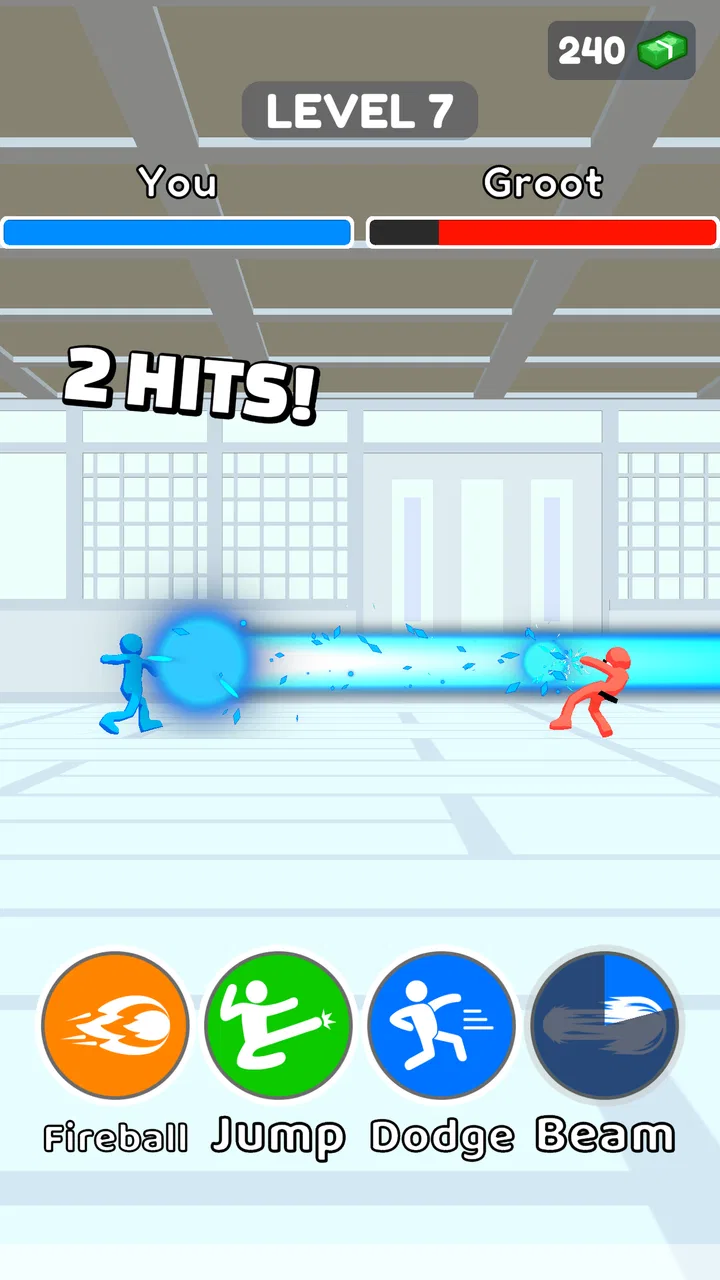
When I want a quick game that can turn a spare minute into a small challenge, I usually look for something with simple controls and an immediate payoff. Kungfu Ragdoll fits that mood well. It is an arcade game from Ketchapp built around a playful kung fu theme and loose, exaggerated movement. The appeal is not a long story or a complicated progression system; it is the pleasure of trying a move, watching the ragdoll-like action unfold, and deciding whether I can do better on the next attempt.
I found it especially easy to pick up on a shared phone or tablet. Someone can hand over the device, explain the basic idea in a few seconds, and let the next person try. That makes it a natural choice for a short break at home, a waiting room, or a casual moment when several people want to take turns without committing to a full multiplayer session. At the same time, its simplicity has limits. Players looking for a deep fighting game, a substantial campaign, or careful competitive balance may find the experience too lightweight.
How Kungfu Ragdoll fits into a shared household
I find Kungfu Ragdoll easiest to enjoy when everyone knows the device is being shared, rather than treating a casual turn as a contest over who owns the best result. I’d agree on a simple turn order and let each person finish an attempt before passing the phone along; that keeps the game welcoming for different skill levels and leaves room for the next question: how to make those turns feel fair.
You May Also Like

 Blood Strike: 2.5 Anniversary
Blood Strike’s Loadouts Turn Every Drop Into a Tactical Gamble
A close look at Blood Strike’s custom loadouts: how fast access to signature weapons reshapes its battle royale rhythm, rewards preparation, and narrows the gap between fights.

 Pandora - Music & Podcasts
Pandora’s Music Is Easy to Start, but Harder to Recover
Pandora’s strength is its low-effort path from a seed to a station. Its weak spot is how much confidence it asks you to place in connection, setup, and quiet recovery.

 8 Ball Pool
 Is Built on Rivalries, Rematches, and Routine
A close look at the rivalries, rematches, shared routines, and unanswered safety questions that turn a quick pool match into a persistent mobile community.

 Samsung Music
’s Quiet Strength Is Playing What You Already Own
Its reach comes less from spectacle than from dependable access to a personal library. That simplicity is both the app’s strongest retention engine and its ceiling.

 AccuWeather: Weather Radar
AccuWeather Review: A Quick, Clear Forecast for Everyday Decisions
For everyday plans, the best forecast is the one you can understand quickly. AccuWeather makes rain timing, radar, and local conditions easy to act on, with a few trade-offs.

 Hill Climb Racing
Why Hill Climb Racing Still Turns Crashes Into One More Run
A tiny car, a bumpy hill and one more upgrade: Hill Climb Racing keeps resurfacing because its simple chaos makes every near-miss feel personal.
More From Our News Desk



A game that works in short hand-to-hand sessions
The strongest household use case is informal turn-taking. I can imagine one person playing while another watches, then passing the device over after a failed attempt or a particularly funny result. Because the action is centered on kung fu movement rather than a large set of menus or a lengthy narrative, there is very little explanation needed before somebody else can participate.
This matters on a shared device. A game that requires a separate account, a long tutorial, or a carefully saved campaign can become awkward when several people use the same phone. Here, the attraction is more immediate: open the game, play for a while, and let the next person have a go. I would use it during a family pause after dinner or while waiting for another activity to start, rather than treating it as the main entertainment for an entire evening.
The ragdoll presentation also gives spectators a reason to stay interested. Even when a player is not holding the device, the exaggerated physical reactions can make a failed attempt entertaining. That creates a different kind of shared experience from a solitary puzzle game, where watching another person may not add much. With this one, the result of an action is part of the fun, especially when the movement goes in an unexpected direction.
There is a useful trade-off here. Short sessions make the game approachable, but they can also make the experience feel repetitive if the player wants a clear sense of long-term development. I would recommend it to households that enjoy quick challenges and playful experimentation. I would be more cautious about recommending it to someone who expects a fighting game with a large roster, detailed tactics, or a substantial story mode.
What I would agree on before handing over the device
On a shared phone, the main boundary is not a complicated setup process; it is agreeing who is playing and when. I would avoid assuming that every attempt belongs to the same person, especially if the game presents progress or results that one player may want to keep for themselves. A simple turn order helps: one person gets a few attempts, then passes the device on.
This is a small point, but it prevents a common household problem. When a game is easy to restart, people may tap through menus quickly and accidentally replace or interrupt another player’s session. I would let the current player finish what is on screen before taking the device, and I would make sure a child understands which buttons begin another attempt and which ones leave the current screen.
I also would not hand the game to a younger child without checking the device’s purchase settings first. The game is free to download, but it includes in-app purchases priced at $2.99 per item. That does not make it unsuitable for shared use, but it does make a clear household rule sensible. On a family device, the safest habit is to keep purchases under the owner’s control and explain that free access does not automatically mean every optional item is free.
The game carries an Everyone 10+ content rating, so I would treat it as a better fit for older children and general family use than for very young players. The kung fu framing is cartoon-like, but parents should still make their own judgment about whether the action and physical comedy suit the child using the device. I would not present the age label as a substitute for supervision or conversation.
Coordinating turns without turning it into a competition
One of the more interesting ways to use this game is as a light coordination activity. Instead of asking who can play the longest, I would give each person the same number of attempts and compare what happened. That keeps the focus on timing, control, and the amusing unpredictability of the ragdoll movement rather than on ownership of the device.
For a household with children of different ages, equal turns are more useful than expecting equal results. An older player may understand the controls faster, while a younger player may enjoy experimenting without worrying about efficiency. I would frame the session around trying a different approach each turn. That gives less experienced players a reason to continue even when they are not matching someone else’s score or progress.
Another practical approach is to separate “practice” from “serious attempts.” During practice, players can explore how the character responds and laugh at mistakes. During the serious round, everyone gets one agreed attempt. This simple structure makes the game feel fair on a shared screen and gives the group a beginning and an end, which is useful when the device also belongs to someone who needs it for messages, schoolwork, or calls.
I would not confuse this with built-in local multiplayer. The shared fun I describe comes from passing the device, watching, and setting household rules; it is not the same as several players controlling characters at once. If simultaneous competition is the priority, a dedicated multiplayer arcade game would be a better choice. Kungfu Ragdoll is more naturally a pass-and-play conversation starter than a formal party tournament.
Why the controls reward patience more than frantic tapping
My main practical tip is to resist treating every attempt as a button-mashing exercise. The loose physical style makes it tempting to react quickly, but a calmer approach usually makes the action easier to read. I would watch what the character is doing, identify the moment when an input matters, and then make a deliberate adjustment rather than tapping repeatedly in panic.
This is also where the game can be surprisingly useful for mixed-skill groups. A player who has never touched an arcade game may not know advanced techniques, but they can still learn by watching another person’s timing. On a shared device, I would encourage the observer to describe what they think will happen before the active player acts. That turns a simple attempt into a small prediction exercise and gives spectators something to do.
A second tip is to change only one thing between attempts. If I alter timing, direction, and overall strategy at once, I cannot tell what helped. Keeping one variable steady makes the trial-and-error loop more satisfying. This is a small habit, but it gives the game more depth than simply repeating the same action and hoping for a different result.
The third insight is that failure can be more valuable than success when learning the feel of the game. A strange result shows how the character reacts under pressure, and those moments help establish a personal sense of timing. I would use the game as a quick experiment rather than demanding a perfect run immediately. That mindset is especially helpful for children who become frustrated when an arcade game does not respond exactly as expected.
Age, trust, and the limits of a shared account
Because this is a free arcade title with optional purchases, I would separate three questions that are often mixed together: who is allowed to play, who owns the device, and who is allowed to spend money. The game can be suitable for shared household use while still requiring the device owner to manage purchases and decide whether a child is ready to use it independently.
I would also explain that a shared device does not necessarily provide separate personal spaces. If several people play on the same installation, they should not assume that every result, setting, or piece of progress will be divided neatly between household members. For a casual game, that may not matter. But if one player cares about maintaining a particular record or personal routine, a private device is a cleaner arrangement.
This is one reason I see the game as better for casual family interaction than for personal achievement tracking. A child can enjoy taking turns and showing a parent what happened, while an older player who wants a private, carefully managed arcade challenge may prefer to play alone. The right choice depends less on the game’s difficulty than on how important individual ownership of progress is in that household.
The game’s age context also deserves a balanced view. Everyone 10+ suggests that it is not aimed exclusively at adults, and its playful style makes it approachable. Still, I would watch how a particular child responds to repeated failure, competitive comparisons, and the temptation to keep trying. Some children enjoy the loop; others may need a clear stopping point. A household rule such as “three attempts each, then we pause” can make the experience more positive than leaving the session open-ended.
How it compares with other arcade choices
Compared with a traditional fighting game, Kungfu Ragdoll is much easier to enter but much less demanding in terms of learning a complete combat system. A conventional fighter may offer more control over characters, attacks, defense, and match strategy. That is the better route for someone who wants mastery, structured battles, or serious competition. I would choose this game instead when I want the humor of physical movement and an experience that can be explained quickly.
Compared with endless runners, it offers a different kind of attention. An endless runner usually asks me to maintain a steady rhythm while avoiding obstacles over time. This game’s kung fu and ragdoll focus feels more like a sequence of individual experiments. That makes it easier to discuss while playing with another person, although it may not provide the same smooth flow that keeps a runner engaging during a longer commute.
Compared with physics puzzle games, Kungfu Ragdoll shares the appeal of watching a system respond to an action. The difference is that the martial-arts theme gives the experiments a more active, character-driven feel. A physics puzzle normally asks me to solve a defined problem, while this kind of arcade play is more comfortable with imperfect outcomes. If I want a precise solution, I would choose a puzzle game. If I want a quick attempt that may end in a funny tumble, this is the more suitable option.
The choice also depends on the device’s role. On a personal phone, I can use it as a brief distraction between tasks. On a household tablet, it works as a shared activity, provided everyone understands the turn-taking and purchase boundaries. On a device used mainly for school or work, I would keep sessions short because the game’s easy restart loop can make “one more attempt” extend longer than intended.
Practical details before downloading
The game is free, which lowers the barrier to trying it with a family member or friend. Optional in-app purchases cost $2.99 per item, so I would check who can authorize purchases before letting a child explore the menus. That is the most important practical detail for a shared device, because the difference between trying a free game and spending money inside it should be clear to everyone using the phone or tablet.
It was released on October 20, 2021, and the current version is 1.4.19. It requires Android 7.0 or later, which makes compatibility fairly straightforward for many Android devices, though I would still check the operating system on an older household phone before planning a group session. The game is listed in the arcade category, and Ketchapp is the developer behind it.
Its store presence also suggests that it has reached a broad audience: it has more than five million installs and a 4.6 average from roughly sixty-six thousand ratings. I treat those figures as a sign that the basic pick-up-and-play idea has connected with many people, not as proof that every player will enjoy it. The individual experience still depends on whether someone likes playful physics, repeated attempts, and short arcade sessions.
For a household, I would install it first on the device that is easiest to supervise rather than automatically placing it on every phone. Then I would let each person try a few rounds and ask a simple question: is the fun coming from improving, from watching the movement, or from competing with others? If nobody enjoys those particular elements, more playtime is unlikely to solve the problem.
Who should choose it, and who should skip it
I would recommend Kungfu Ragdoll to players who enjoy quick arcade experiments, cartoon-like martial-arts action, and the satisfaction of trying again after an awkward result. It is particularly suitable for a shared household where people want something that can be passed around without a long explanation. It also suits anyone who prefers a free game that can fill small gaps in the day without demanding a large commitment.
I would be less enthusiastic for players who need a strong sense of personal progression, a story to follow, or a deep combat system. Someone searching for online matches, simultaneous local play, or a carefully balanced competitive fighter should look elsewhere. The game’s charm comes from its narrow focus, and that focus can feel limited once the novelty of the ragdoll action wears off.
I would also skip it as a shared choice if the household cannot agree on purchase rules or device turns. The game itself may be simple, but shared use still benefits from basic coordination. Without that, one player may interrupt another, a child may misunderstand what is free, or the device owner may find the game competing with more important tasks.
My household verdict
After looking at it as both an arcade game and a shared-device option, I see Kungfu Ragdoll as a compact, approachable choice rather than a complete fighting experience. Its best moments come from quick experimentation, funny physical reactions, and the social rhythm of passing the device to someone else. I like that a new player can join without studying a long rulebook, and I appreciate that the game can support small challenges between family members without requiring a formal multiplayer setup.
Its limitations are just as clear. The same simplicity that makes it welcoming can reduce its staying power for players who want depth. Repeated attempts may feel rewarding for a while, but not everyone will want to build a long-term routine around them. The optional purchases also mean that a shared device needs sensible boundaries, while the Everyone 10+ rating calls for an age judgment rather than automatic approval for every child.
My recommendation is to treat it as a short, supervised arcade activity with room for friendly turn-taking, not as the household’s main game. If that matches what you want, the free download makes it easy to test with a few rounds. I would start with a clear turn order, keep purchase permissions with the device owner, and encourage players to change one tactic at a time. Used that way, it offers a cheerful burst of kung fu chaos and enough trial-and-error appeal to make a spare few minutes genuinely enjoyable.
FAQs for Kungfu Ragdoll
01What is Kungfu Ragdoll and what can I expect from the gameplay?
Kungfu Ragdoll is an action-packed mobile game that combines elements of martial arts with ragdoll physics. Players can expect a humorous and dynamic experience as they control a ragdoll character through various fighting scenarios. The game offers multiple levels, each with unique challenges, and a range of customizable moves to keep players engaged.
02Is Kungfu Ragdoll available on both Android and iOS devices?
Yes, Kungfu Ragdoll is available for download on both Android and iOS platforms. Users can easily find it on the Google Play Store for Android devices and the Apple App Store for iOS devices. Ensure your device meets the compatibility requirements to enjoy a smooth gaming experience.
03Are there any in-app purchases in Kungfu Ragdoll?
Kungfu Ragdoll does offer in-app purchases which allow players to enhance their gameplay. These purchases can include special moves, character upgrades, and cosmetic items. While these are optional, they can provide a richer experience for those looking to expand their capabilities and customize their ragdoll fighter.
04Does Kungfu Ragdoll require an internet connection to play?
Kungfu Ragdoll can be played offline, making it convenient for users who may not always have access to an internet connection. However, certain features, such as updates and in-app purchases, will require an internet connection to function properly. Playing offline allows you to enjoy the core gameplay anytime, anywhere.
05How does Kungfu Ragdoll handle user data and privacy?
Kungfu Ragdoll prioritizes user privacy and adheres to standard data protection protocols. The game may collect data to enhance user experience and provide support but ensures this information is handled securely. Users are encouraged to review the privacy policy available within the app for detailed information on data usage and protection measures.
Pros
- Engaging physics-based gameplay.
- User-friendly interface.
- Wide variety of levels.
- Customizable characters.
- Smooth performance on most devices.
Cons
- Limited character skins.
- Occasional in-app ad interruptions.
- Some levels feel repetitive.
- Requires internet connectivity.
- No multiplayer mode available.

Kungfu Ragdoll
Gallery